


Business: business@xtoolonline.com
Social Media Cooperation: Media@xtoolonline.com
Support: support@xtoolonline.com

If you are driving and suddenly notice your Check Engine Light (CEL) illuminating—or worse, flashing—it is a clear sign that your vehicle’s onboard diagnostic system (OBD II) has detected a problem. If you connect an automotive scan tool and pull a P0304 code, your vehicle is telling you specifically: Cylinder 4 Misfire Detected.
A misfire is not something you should ignore. Ignoring a persistent P0304 code can quickly escalate from a simple fix into an incredibly expensive repair, such as a melted catalytic converter. This comprehensive guide will walk you through exactly what this code means, what causes it, and how to use a professional diagnostic tool to pinpoint and fix the root cause without wasting money on unnecessary parts.
To understand a P0304 code, you have to look at how an internal combustion engine works. Every cylinder requires three fundamental elements to create a successful explosion and power your vehicle:
The P0304 code is a cylinder-specific fault code. It means the Engine Control Unit (ECU) has monitored the crankshaft speed and calculated that Cylinder 4 is not contributing enough power to the engine rotation. According to automotive industry standards set by ASE (National Institute for Automotive Service Excellence), if a single cylinder's misfire rate exceeds roughly 2%, the ECU will trigger a diagnostic trouble code (DTC).

When Cylinder 4 misfires, you won't just see a light on the dashboard; you will feel it. Common symptoms include:
Critical Safety Note: According to the EPA (Environmental Protection Agency) OBD II mandates, a flashing check engine light indicates a misfire severe enough to damage your catalytic converter. Raw, unburned fuel is being pumped directly into the exhaust system, where it can cause the catalytic converter to exceed 1,200°F (649°C), melting its internal ceramic structure within minutes. If your light is flashing, pull over safely.

Before buying replacement parts, it helps to understand the most likely culprits. A misfire generally boils down to a failure in one of the three elements mentioned earlier.
| Probable Cause | Impact on Cylinder 4 | Diagnostic Clue |
|---|---|---|
| Failing Ignition Coil | Zero spark delivered to the spark plug | Misfire jumps cylinders when swapped |
| Fouled Spark Plug | Weak or inconsistent spark | Heavy carbon deposits or an incorrect gap |
| Clogged Fuel Injector | Lean misfire due to a lack of fuel | High Long-Term Fuel Trim (LTFT) data |
| Low Cylinder Compression | Mechanical failure (valves/rings) | Constant misfire regardless of engine RPM |
The ignition coil or the spark plug in Cylinder 4 is worn out. Over time, spark plug gaps widen, requiring more voltage than the coil can provide. Alternatively, the insulation on the ignition coil boot can crack, causing the spark to arc to the engine block rather than reaching the plug.
If Cylinder 4 isn't getting enough fuel, it creates a lean misfire. This is usually caused by a dirty, clogged, or electronically failing fuel injector that cannot spray the precise mist of gasoline required.
An engine vacuum leak near the intake manifold runner for Cylinder 4 can introduce unmetered air, throwing off the air-fuel ratio. In worse scenarios, physical mechanical wear—such as a burnt exhaust valve, a blown head gasket, or worn piston rings—prevents Cylinder 4 from holding compression.
The biggest mistake DIYers make with a P0304 code is immediately buying a new set of spark plugs and coils without testing. Follow this logical, step-by-step diagnostic process instead.
Plug a professional diagnostic tool with Freeze Frame Data, such as an XTOOL scanner, into your vehicle’s OBD2 port beneath the dashboard. Do not just read and delete the code; look for the Freeze Frame Data.
Freeze frame data captures a snapshot of the engine's exact operating parameters the moment the P0304 code triggered. Check the engine RPM, engine temperature, and Fuel Trims. If the misfire only occurs at idle but disappears at higher RPMs, you are likely dealing with a vacuum leak. If the misfire worsens under heavy acceleration, it points toward a failing ignition coil or a fuel delivery issue.

This is the ultimate professional technician shortcut to isolate an ignition failure without spending a dime.
The Logic: If your scanner now displays a P0303 code (Cylinder 3 Misfire), the fault has moved to the coil. Replace that single ignition coil. If the code remains P0304, your coil is perfectly fine, and the problem lies elsewhere.

Pull the spark plug from Cylinder 4. Look closely at the firing tip. Heavy black carbon deposits indicate a rich condition or oil fouling. Use a feeler gauge to measure the spark plug gap and compare it to your vehicle’s factory specifications (usually between 0.030 and 0.045). If the electrode is worn flat or rounded, replace the plug.
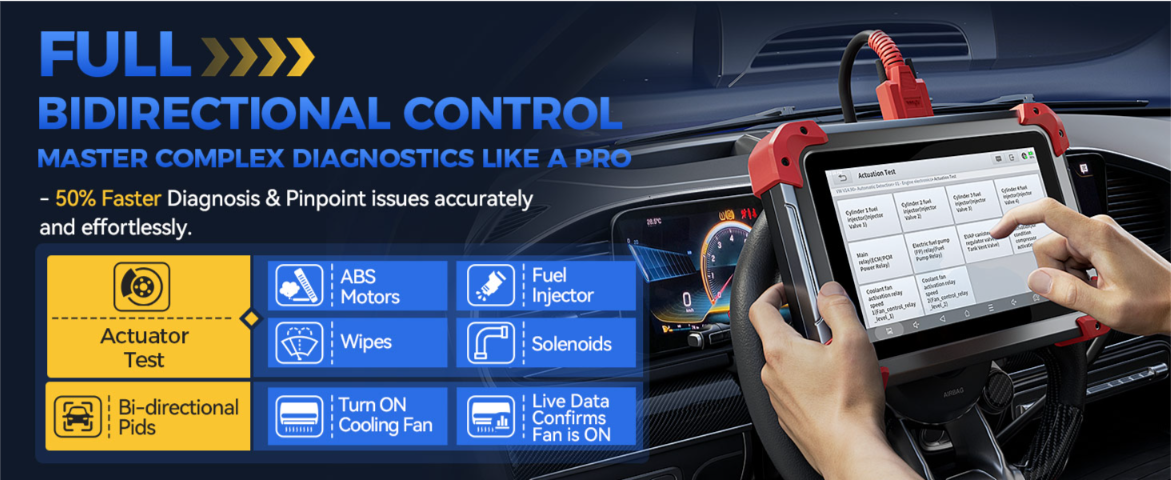
If the spark plug and coil pass inspection, use a high-end vehicle diagnostic tool featuring bi-directional control. You can perform a Power Balance Test or command a cylinder cutout to see how the engine responds. Monitoring live data streams for injector pulse width will help determine if the ECU is properly commanding the Cylinder 4 fuel injector to open.
What happens if you have replaced the coil, swapped the spark plug, and the P0304 code refuses to go away? This is where many vehicle owners get frustrated and trapped in a loop of throwing parts at the car.
If the ignition components are brand new and the misfire persists, you need to look at modern engine architecture. If you drive a modern vehicle equipped with a Gasoline Direct Injection (GDI) engine (common in many Ford EcoBoost, Volkswagen TSI, or GM Ecotec engines), you are highly susceptible to intake valve carbon buildup.
Because GDI engines spray fuel directly into the combustion chamber rather than over the back of the intake valves, the cleaning detergents in gasoline never wash the valves. Over time, hard carbon builds up on the intake valves of Cylinder 4. This carbon acts like a sponge, absorbing fuel during a cold start and restricting airflow, causing a persistent cold-start P0304 code. Resolving this requires physical cleaning (such as walnut blasting), not new electronic parts.
Another hidden trap is a microscopic head gasket failure specifically bordering Cylinder 4. When you turn off your car at night, the cooling system remains pressurized. A tiny leak can allow a small drop of coolant to seep into Cylinder 4 overnight.
When you start the car in the morning, that coolant wets the spark plug, causing a severe P0304 misfire and a rough idle for the first 30 seconds. As the engine heats up, the coolant burns off, the cylinder regains its rhythm, and the misfire disappears for the rest of the day. A simple block test or chemical coolant pressure test is required to uncover this mechanical trap.

Q1: Can I drive with a P0304 code?
A: If the Check Engine Light is solid and the car drives relatively normally, you can safely drive it to a local repair shop or home to diagnose it. However, if the light is flashing, you must stop driving immediately to prevent permanent damage to your catalytic converter.
Q2: Will a P0304 code clear itself?
A: No. Even if the physical issue (like a loose wire) resolves itself, the ECU stores the P0304 code as a historical code. You must use an automatic tool or OBD2 reader to manually clear the code and reset the vehicle’s emission monitors.
Q3: How much does it cost to fix a Cylinder 4 misfire?
A: The cost varies wildly based on the root cause. If it is just a bad spark plug, a DIY fix will cost you around $15 to $30. If an ignition coil needs replacement, expect to pay $60 to $150. However, if the misfire is caused by low compression from a blown head gasket or cracked valve, professional shop labor in North America can quickly range from $1,500 to $3,000.
Fixing a P0304 code successfully comes down to following a logical diagnostic chain rather than guessing. By utilizing an OBD2 scanner to check freeze frame data and executing simple diagnostic techniques like the coil swap-test, you can protect your wallet from parts-cannon mechanics. Invest time into identifying whether the issue is spark, fuel, or mechanical, and you will get your vehicle running smoothly again with total confidence.


Business: business@xtoolonline.com
Social Media Cooperation: Media@xtoolonline.com
Support: support@xtoolonline.com